Atlas AI Browser: How ChatGPT is Changing Search

A new AI-powered web browser has just been released by the makers of ChatGPT, and it’s already turning heads for how it reimagines the way people explore the internet. Unlike traditional browsers, this one doesn’t rely on a simple search bar or long lists of links. Instead, it uses artificial intelligence to help you find, summarize, and act on information faster – all through natural conversation. In this article, we’ll explore what this new browser is, how it works, and what it means for the future of searching online.
search engine optimization

What Is This New Browser and What Makes It Different?

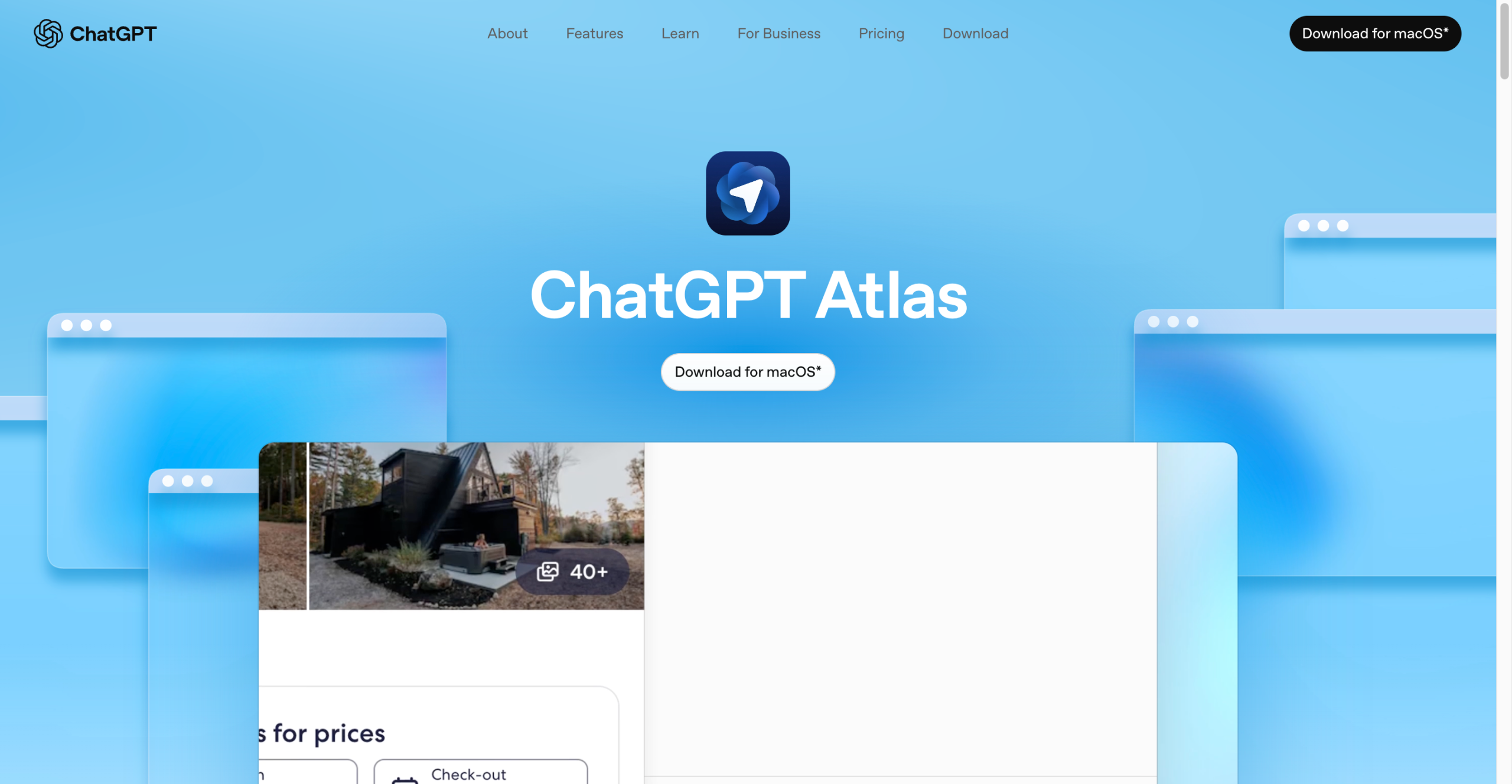
The new browser, called Atlas, is built entirely around artificial intelligence. Instead of typing a web address into an address bar, users interact with ChatGPT directly – the chatbot serves as the main gateway to the internet. When you open a new tab, you’re greeted not by a search box, but by ChatGPT, ready to answer questions or perform tasks.

The idea behind Atlas is to make browsing feel more like having a conversation. Rather than typing keywords into a search engine, you can simply ask something like, “Find a few good Italian recipes for dinner tonight,” and the browser will gather and organize results automatically. In other words, Atlas replaces the old “type-and-click” model with an “ask-and-act” approach.

How Does It Change the Way People Search Online?

Atlas doesn’t just show you search results – it interprets what you want and gets right to the point. When you ask a question, the AI scans relevant web pages, summarizes key information, and delivers clear answers instead of a list of blue links. This makes it faster and easier to get direct, useful results.

For example, if you ask, “What are the best hotels in Chicago under $200 a night?” you won’t have to scroll through endless reviews and ads. The AI will check multiple sources, summarize the top-rated options, and present them in one place. It’s like having a digital assistant built into your browser – one that understands both your question and the context behind it.

This shift also reflects a broader trend in how people use the internet. Reports show that nearly 6% of desktop searches now happen through large language models – double what it was just a year ago. More people are beginning to rely on AI to handle research, planning, and even decision-making.

What Is Agent Mode and How Does It Work?

One of the most talked-about features of Atlas is its experimental “Agent Mode.” This feature allows the AI to perform online tasks for you, almost like a virtual assistant that can take the wheel.

For example, imagine you’re planning a dinner party. You could tell the browser, “Find three simple dinner recipes for six people, order the ingredients for delivery, and create a music playlist for the evening.” Once you hit enter, Agent Mode will start searching for recipes, checking ingredient lists, adding items to an online shopping cart, and suggesting a playlist to match.

While it’s still early in development, Agent Mode gives a glimpse into a future where people don’t have to manually click through dozens of pages. Instead, the AI can handle multi-step actions while you supervise or make final choices.

Does Atlas Still Let You Visit Regular Websites?

Yes, absolutely. Even though Atlas removes the traditional address bar, you can still visit any website by typing its address directly into the chat window. The difference is that you’re doing it in conversation with ChatGPT, not through a static search bar.

This design makes the experience more fluid. Instead of switching between tabs or copying text from one site to another, you can ask ChatGPT to summarize, rewrite, or compare content directly within the page you’re viewing. For example, if you’re filling out a form or writing an email in the browser, you can ask the AI to reword your message without leaving the page.

Why Did the Developers Build It This Way?

The creators of ChatGPT designed Atlas to rethink what a browser could be in the age of AI. They saw an opportunity to merge search, browsing, and productivity into one tool powered by conversation.

During its introduction, company leaders described it as a “once-in-a-decade” chance to reinvent how people interact with the web. The main idea is to move away from endless clicking and scrolling, and toward more natural, context-based interaction.

In other words, Atlas aims to make the internet feel less like a maze of pages and more like a helpful dialogue.

How Does Atlas Handle Everyday Browsing Tasks?

Atlas is still capable of everything you’d expect from a normal browser – you can check email, stream videos, shop online, or read the news. But its AI integration makes each task smoother.

Let’s say you’re researching a topic for work or school. You can ask ChatGPT to summarize several web pages at once, extract key points, and even compare opposing viewpoints. You can also use it to rewrite text, draft replies, or proofread what you type online.

This kind of built-in assistance reduces the need to juggle between tabs, copy-paste information, or open separate editing tools. Everything happens within one interface, saving both time and effort.

Is Atlas Available for Everyone Right Now?

For now, Atlas is only available on computers running macOS, but the company has said it plans to release versions for other operating systems in the future. Agent Mode – the tool that lets the AI perform tasks automatically – is currently available only to paid subscribers. However, anyone can download the basic version of Atlas for free and start using it for everyday browsing.

This gradual rollout helps the developers test and refine the technology before expanding it to a wider audience.

How Do Experts View This New Browser?

Analysts and tech observers are watching Atlas closely. Some believe it represents a major step forward in how we’ll use the web, while others think it will take time for people to adjust.

Traditional browsers like Chrome and Safari are deeply familiar to most users, and changing habits can be slow. Still, many experts agree that AI-driven tools like Atlas could reshape how we think about search engines altogether – moving from typing to talking, and from browsing to doing.

The big question is whether Atlas can gain enough users to challenge established browsers. But even if it doesn’t replace them outright, it’s already pushing the industry toward a more conversational, context-aware future.

What Does This Mean for the Future of the Internet?

If Atlas and other AI-powered browsers succeed, searching online could soon feel completely different. Instead of typing exact phrases or clicking through multiple links, you might simply describe what you need – and let AI handle the details.

For businesses, this change could also transform online visibility. Traditional SEO strategies that focus on keywords might evolve toward optimizing content for conversational AI, ensuring that sites are easily understood and summarized by intelligent systems like ChatGPT.

That means businesses may need to adapt how they present information, structure their websites, and design content for AI-driven discovery.

Want To Learn How This Shift Could Impact Your Website?

As AI changes the way people find information online, search engine optimization is evolving just as quickly. If you want to stay ahead, it’s important to make sure your website is ready for how people – and AI – now explore the web.

Contact the online marketing experts at DigitalParc today to learn how we can help you strengthen your website’s visibility, improve your SEO, and prepare your business for the future of AI-powered search.

Posted in SEO

What Our 2027 SEO Predictions Mean For Your Business

What Will Be The State Of Search Engine Optimization In The Year 2027?

If you’ve ever felt like search engine optimization (SEO) changes faster than you can keep up, you’re not alone. By 2027, the way people find information online will look very different from what it is today. AI-powered search, personalized results, voice and image searches, and something new called Generative Engine Optimization (GEO) will reshape how websites compete for visibility.

In this article, you’ll learn what these changes mean, how they’re already unfolding, and what you can do to stay ahead as SEO and AI merge into one smarter, more conversational form of search.

What Is Changing Most About SEO Between Now And 2027?

The biggest change is how search engines think.

Google and other platforms are no longer just matching keywords to websites – they’re using artificial intelligence to understand meaning and intent. Instead of typing a question and scrolling through 10 links, people can now ask AI-driven systems like Google’s “AI Overviews” or ChatGPT Search and get instant answers written in plain language.

By 2027, these AI-powered results will dominate search pages. Many people won’t even click on a website – they’ll get what they need from AI summaries. This shift is already underway. It means that SEO will be less about ranking for one keyword and more about making sure your content is accurate, trustworthy, and included in these AI-generated answers.

For example, if someone asks, “What’s the best diet for neuropathy?” Google might not just list ten blogs anymore. It may show a single AI-written summary that cites two or three trusted sites. The sites that the AI quotes are the ones that will win traffic and trust.

What Exactly Is GEO, And How Does It Fit Into SEO?

Generative Engine Optimization (GEO) is the next evolution of SEO.

Traditional SEO focuses on optimizing websites for search results pages. GEO focuses on optimizing content so that AI systems – like Google’s AI Overviews, ChatGPT, or Microsoft Copilot – can understand and use it directly in their generated responses.

Think of it like this: SEO helps search engines find your site. GEO helps AI talk about your site.

By 2027, both will matter. GEO depends on SEO because AI engines pull from high-quality, well-structured, and credible web pages. If your content isn’t clear, accurate, and human-reviewed, it’s less likely to appear in these AI-generated summaries.

For instance, if a local vet clinic writes detailed, trustworthy content about “treating allergies in dogs,” AI assistants could use that information in an answer – even if the user never clicks through. That still builds brand recognition and authority.

search engine optimization

How Will AI Affect The Way We Track SEO Performance?

Tracking performance will get harder before it gets easier.

In late 2025, Google quietly removed a long-used tool parameter that let professionals pull 100 search results per page. This broke many rank-tracking tools overnight, showing how tightly Google now controls its search data. That move signals a future where businesses get less visibility into how they rank and must rely more on official tools like Google Search Console.

By 2027, rank tracking as we know it may not even exist. Instead of monitoring positions for specific keywords, teams will track visibility share – how often their brand appears across AI results, snippets, and voice responses. Success will depend more on trust and authority than keyword rankings.

For example, a home improvement company might notice fewer clicks to its website but more brand mentions inside AI answers about “how to repair a leaky roof.” That’s a new kind of visibility, and it will matter just as much as old-fashioned rankings.

What Role Will AI Play In Creating And Optimizing Content?

AI will be everywhere in SEO – but humans will still make the difference.
By 2027, most marketing teams will use AI tools daily for keyword research, outlining, data analysis, and even writing drafts. But Google has made it clear: content that feels robotic, repetitive, or generic won’t perform well.

To stand out, AI-assisted content must show human experience, expertise, and trustworthiness (what Google calls E-E-A-T). AI can help with structure, tone, and consistency, but real insights must come from people who’ve lived the topic.

For example, an accountant could use AI to draft an article on tax deductions. But to rank well, they’d need to include personal examples, client stories, and expert tips that only a human could provide.

AI will make SEO faster – but authenticity will keep it effective.

How Will Search Become More Personalized?

By 2027, everyone’s search experience will look different.

Google will know what you’ve searched for, where you are, what device you’re using, and what type of information you prefer. Search results will adapt in real time, showing answers and suggestions tailored to each user.

That means two people searching “best coffee shop near me” might get completely different answers – not because of ranking tricks, but because of context.

Personalized SEO will rely heavily on user signals like engagement, local relevance, and reputation. Businesses will need to maintain updated profiles, consistent information across the web, and genuine customer reviews to stay visible.

Voice and image searches will also make personalization deeper. Imagine taking a picture of a cracked phone screen and asking Google, “Where can I fix this?” – then instantly getting local repair shop listings with prices and reviews. That’s the kind of intuitive search 2027 will bring.

Will Keywords Still Matter In 2027?

Yes – but differently.

Keywords will remain important as clues for intent, but search engines will rely more on topic relationships and semantic meaning than exact word matches.

Instead of stuffing pages with the same keyword, successful SEO will focus on clarity. AI and search crawlers now read like humans. They can tell when content answers a question naturally versus when it’s over-optimized.

For instance, if you write about “ways to improve sleep,” Google will also understand that your article might be relevant to “how to fall asleep faster” or “natural sleep remedies.” You don’t need to repeat every phrase. You just need to explain the topic well.

So yes – keywords still guide search – but storytelling, structure, and usefulness will guide results.

How Will Businesses Need To Adapt To Succeed?

The winners in 2027 will be the businesses that adapt early.

They’ll stop thinking of SEO as just “ranking” and start thinking about visibility everywhere: search, AI answers, maps, videos, and even digital assistants.

To prepare, companies should focus on four key goals. First, keep content fresh and updated because AI favors new, relevant information. Next, use structured data so search engines and AI can easily understand your content. It’s also important to earn mentions from trusted sources and include written, visual, and video content to reach users in any format.

A good example is a travel company that publishes updated guides with real traveler experiences, optimized videos, and clear answers to common questions like “Is Iceland safe for solo travelers?” Their content could appear in Google’s AI Overview, YouTube Shorts, and Google Maps – all at once.

That’s what “being everywhere” means in the next wave of SEO.

Will GEO Replace SEO Completely?

No – it will expand it.

GEO and SEO are two sides of the same coin. SEO ensures your website is technically sound, well-written, and discoverable. GEO ensures that AI tools can interpret and use that content when generating answers.

By 2027, the two strategies will blend. Businesses won’t choose between them – they’ll optimize for both. That means building content that’s structured, trustworthy, and easy for both humans and AI to understand.

If SEO is the foundation, GEO is the bridge to the future. One helps you get found. The other helps you get featured.

seo

What Will “Success” Look Like For SEO In 2027?

Success in 2027 will be measured by visibility, trust, and engagement – not just clicks.
You’ll know your strategy is working if your brand is consistently appearing in AI-generated answers, local results, image searches, and voice responses. Even if fewer people click directly to your website, your presence across these platforms will build awareness and authority.

For example, a nutrition coach might find that her articles appear in AI summaries about “healthy meal plans,” her videos show up in visual search, and her name is mentioned in voice assistant results. That’s the new version of page-one dominance.

The ultimate goal won’t just be ranking – it’ll be relevance everywhere users look for answers.

Final Thoughts

By 2027, SEO will no longer be just about chasing algorithms. It’ll be about earning trust from both people and machines. As AI takes center stage in how search works, GEO will help bridge the gap between human insight and machine understanding.

Those who adapt early – by writing clear, human-centered content, staying technically sound, and embracing AI tools responsibly – will lead the next era of visibility. SEO isn’t dying; it’s transforming into something smarter, more personal, and more connected than ever before.

Strengthen Your SEO Strategy

If you’re ready to boost your website’s visibility and performance, contact DigitalParc. Our team can help you find the right balance between GEO and SEO to reach more customers and grow online. Call us today at 612-845-5590 to get started.

Posted in SEO
Let's Talk Growth

READY TO
GROW?

If you're serious about scaling, let's talk. Fill out the form and we'll show you what our dedicated marketing can do for your business.

"*" indicates required fields

Strategy Call

Let's see if we're a fit.

Enter your website and we'll do a quick brand snapshot before your call with Andrew.

No website? Skip this step →

Analyzing

Running your brand snapshot…

Checking your online presence
Your Brand Snapshot

DigitalParc is built for businesses like yours.

Strong fit for DigitalParc, most businesses like yours see measurable results within the first 90 days.
D
Your Brand
Analyzing…
Analyzing…
Analyzing…
Analyzing…
Not enough leads
Low website traffic
Poor conversion rate
Weak brand presence
No clear strategy
Scaling paid ads
Book Your Call

Pick a time that works.

30-minute strategy call with Andrew, CEO of DigitalParc.

-
You're booked.

Your strategy call is confirmed.

Andrew will review your snapshot before the call so you can hit the ground running.

Check your email for a calendar invite. Questions? andrew@digitalparc.com